Marathon Training: Trust the Process
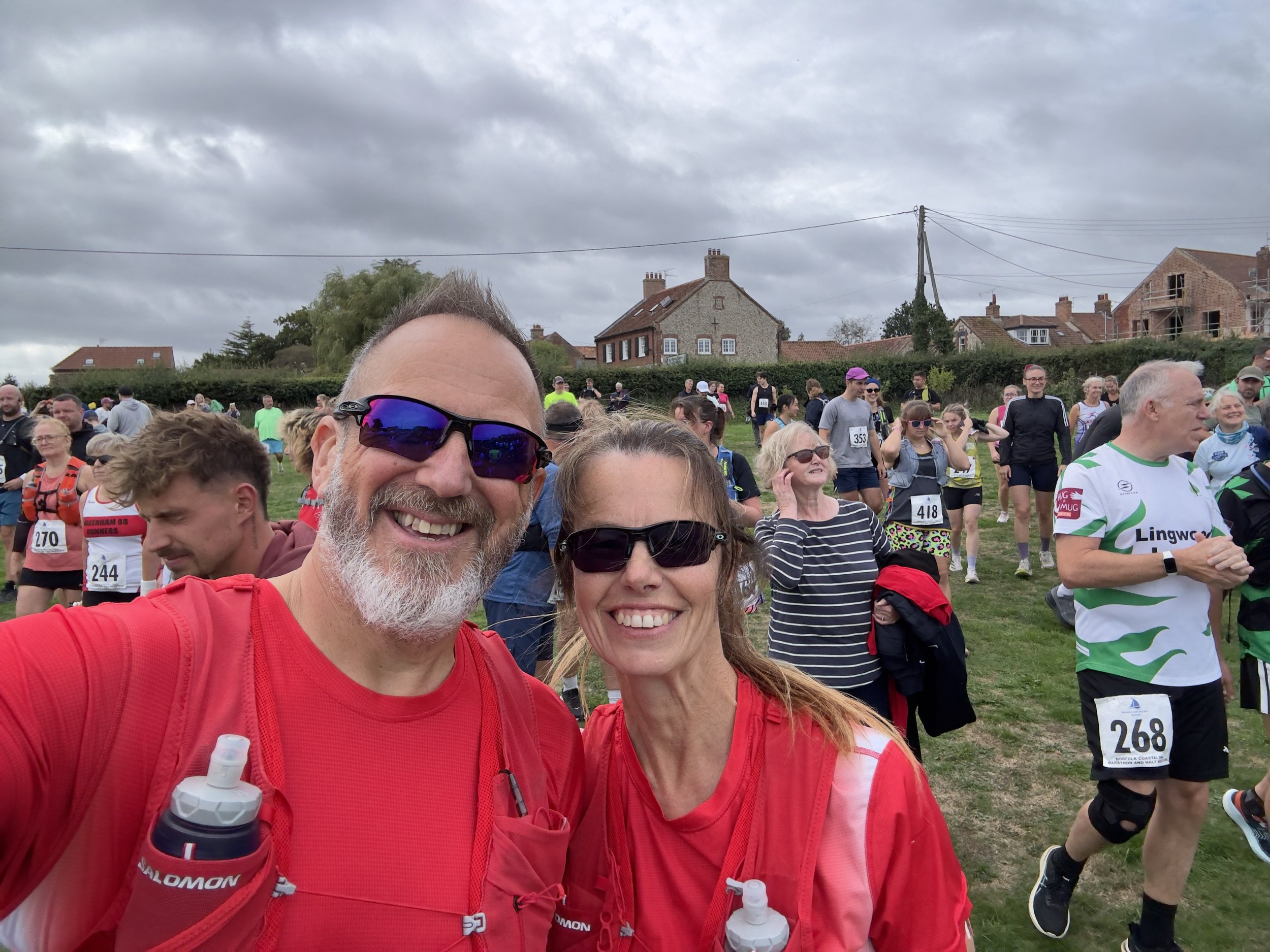
Last week was an interesting one in the training block.
I started the week flying — still buzzing from the Round Norfolk Relay. To some extent, the high from that weekend was masking the fatigue that had accumulated. I was tired, but the adrenaline was still doing its job.
Monday was an easy session. It wasn't really a programmed training run; instead, I was supporting a club colleague who was working towards qualifying as a running group leader.
The whole group was tired, which led to a considerable amount of humour — not to mention some rather strange noises. The sort of noises that become compulsory when you stand up after a certain age.
Tuesday brought a tempo session, and I was really pleased with the paces. I managed to hit everything I was supposed to, which was both satisfying and, importantly, confidence-building.
Wednesday was a shakeout run and provided some respite before Thursday, which was a rest day.
I needed it.
By this point, I really needed a rest.
Friday was another short shakeout, and then I was set up for the heaviest weekend of this particular training block.
Saturday: the Norfolk Coastal Half Marathon.
Sunday: a three-hour long run.
It was going to be a big one.
The Coastal Half
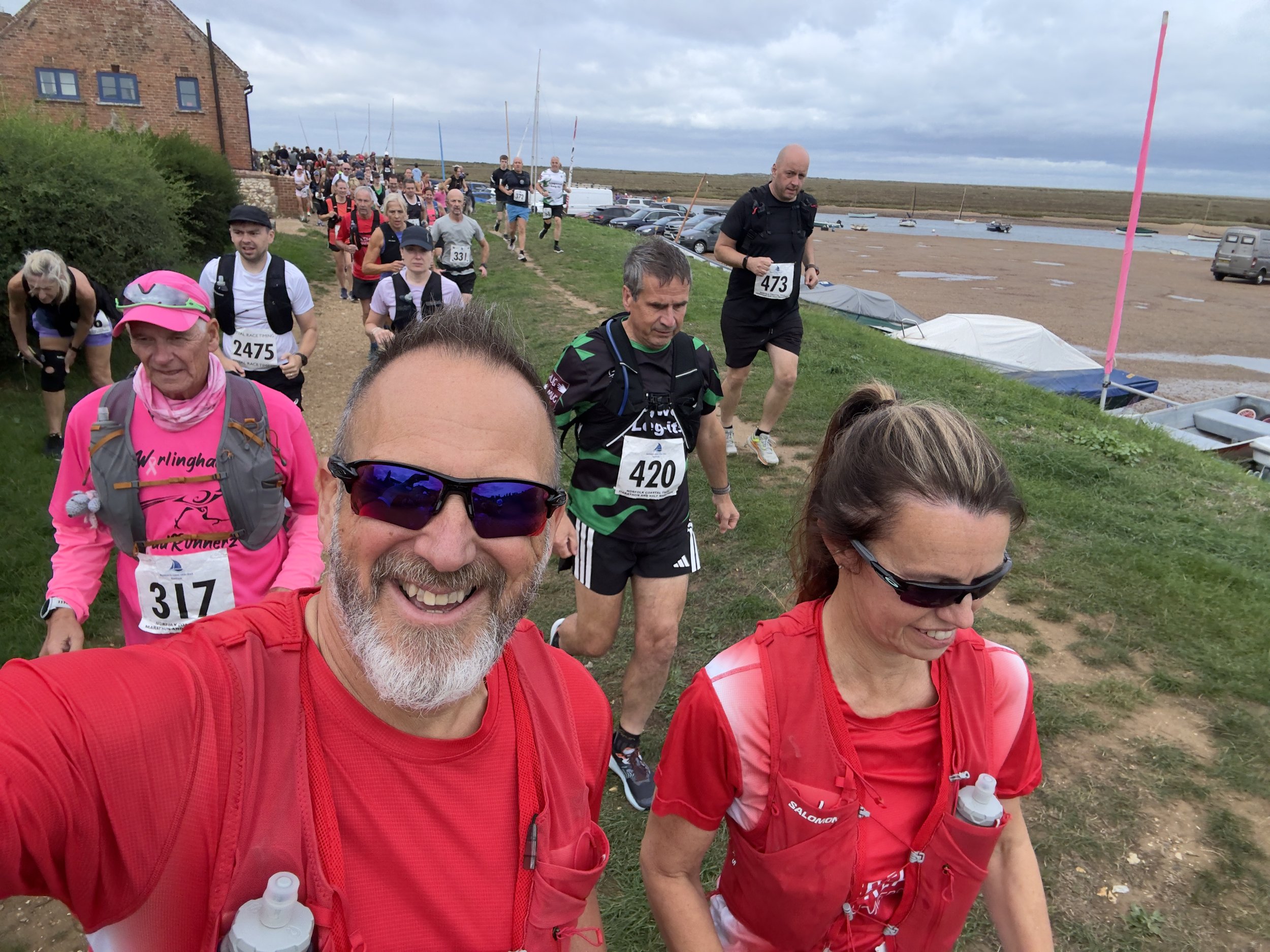
After after parking at Morston Quay , the finish we were bused to the start at Burnham Overy, incidentally where H finished her Round Norfolk Relay leg last week .
The Norfolk Coastal Half was supposed to be an easy training run.
That was the plan.
It didn't quite work out that way.
Trying to judge an easy pace on sand and gravel isn't particularly straightforward, especially when there are narrow sections where runners are being queued and the race becomes a series of stops and starts.
I enjoyed it, though.
Perhaps a little too much.
I ended up finishing first in my age group, while Helen is also showing signs that she's getting back towards her best. I remember thinking afterwards:
I hope I haven't overdone this.
That thought stayed with me.
Three Hours on the Legs
Sunday morning came around and I set off bright and early.
Three hours was the target.
I was expecting to put around 20 miles into the legs, taking the week's total to approximately 55 miles.
I was already aching and could feel niggles developing around the hip and lower legs.
I'd arranged to meet Ash, my trainer, at 8.30am for the middle section of the run. His company was very welcome — not least because long runs are as much a mental challenge as a physical one.
I've developed my own way of approaching long runs.
I divide them into sections.
I'll often loop back towards home for drinks, and sometimes I'll even change shoes. Anything to protect the feet.
Although, at this stage of marathon training, that particular battle may already have been lost.
Seven black toenails says it all.
The joys of marathon training.
My first loop took me towards Cockley Cley and into the forest, returning via Drymere. It's a lovely route and one I really enjoy.
My hip, however, was starting to cause some pain.
I made the decision to carry on. This was an important long run and I knew how significant the training was at this stage of the marathon block.
But I also made a deal with myself.
If necessary, I'd switch off the following day's training and take an extra rest day.
I've learned something about injuries over the years: take them a day at a time.
Don't think too far ahead.
Meeting Ash was a blessing. The conversation and company distracted me as we worked our way around trails and country roads.
Eventually, I dropped him off before starting the final — and thankfully shorter — loop.
I don't particularly enjoy the long, slow runs that form such a big part of marathon training.
It's not that I dislike them.
I just need some sort of distraction.
Thankfully, the Logan Smith and Mark Armstrong Snail and Pace podcast had a new episode covering the Round Norfolk Relay. That swallowed an hour of the first loop, and between that and the conversation with Ash, the three hours passed reasonably quickly.
Then came Monday.
Don't Panic
I woke up and could hardly get out of bed.
The pain in my hip and glute was different.
This wasn't a niggle that you could simply run through.
This was the sort of pain that makes you stop and think.
And with the marathon only three weeks away, it was exactly the sort of pain I didn't want.
It was time to seek help.
The first piece of advice I received was simple:
Don't panic.
So I tried not to.
The problem was, I was worried.
Getting injured this close to the marathon would be a huge blow. But I also knew that if I could turn things around quickly, I wouldn't necessarily lose too much fitness.
So I took two days completely off running.
It felt like cold turkey.
Not because I was desperate for training, but because I genuinely love running.
I love running more than I love the time on the clock.
And, inevitably, my mind started running its own marathon of scenarios.
Do I want to run if I have to run-walk?
What if I can't get through it?
What if the marathon is gone?
That's the paranoia of marathon training.
The event has a remarkable ability to get inside your head, particularly when you're only three weeks away.
And, to be fair, it's not entirely irrational.
The marathon is demanding. This will be my fifth, and they haven't all gone according to plan.
I know that marathon running is a sport of marginal gains. Everything has to come together on the day.
There really is no room for a wonky donkey.

48 Hours
Forty-eight hours of rest. We walked in the countryside , if we’re going to rest , we decided to make it quality time.
Anti-inflammatory medication.
Alternating ice and heat.
And, importantly, some expert help.
By Wednesday, I was scheduled for a 1 hour 15 minute shakeout run.
I went easy.
Really easy.
The pain was down to around 2 out of ten. Within the threshold.
More importantly, it didn't get worse during the run.
That was a positive.
Thursday morning came.
I got out of bed.
Nothing more than a twinge.
Prayers answered.
Today's session was going to be a marathon paced focused Fartlek. I'd be careful, but the show was going on. If you’re unfamiliar with the term Fartlek , it’s a Swedish word , means speed play.
The Test
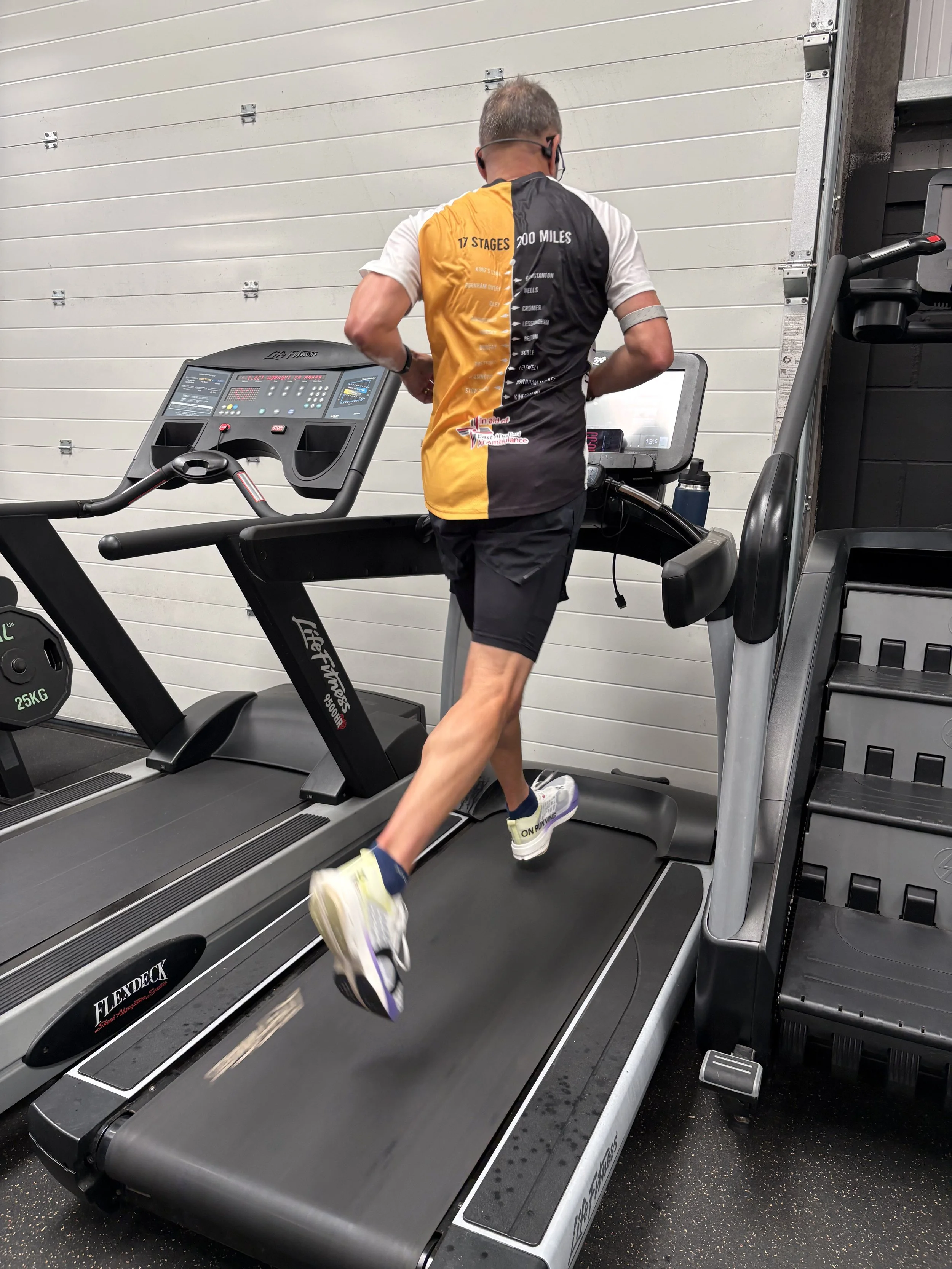
I headed to the Gym , I know treadmills divide opinion , but I don’t mind them , especially where I need to control pace and opt for an easier impact option.
And this was where the real test came.
A 6, 5, 4, 3, 2, 1 marathon focused Fartlek, increasing the speed with each effort.
I could feel the injury.
Just.
But I could run.
The first effort: 7.45 mph pace .
Okay.
Next: 7.40 mph.
Still okay.
7.35 mph.
I'm okay.
7.30 mph.
7.25 mph.
Bloody hell — am I actually going to do this?
Then:
7.20 mph.
Yes.
Who is this man?
Because it certainly wasn't the man who woke up on Monday morning.
Trust the Process
So, yes.
Marathons are tough.
Marathon training is tough.
It's laborious, fatiguing, sometimes injurious and, perhaps most importantly, it plays with your head.
One minute you're flying.
The next you're wondering whether the whole thing has disappeared down the drain.
But I've learned that you have to trust the process.
Trust the people you've brought on board to help you.
Listen to your body.
Take the rest when you need it.
And above all, trust God.
There's a verse from Ephesians that I have leant on this week:
“Now to him who is able to do immeasurably more than all we ask or imagine, according to his power that is at work within us.”
— Ephesians 3:20
Three weeks to go.
The marathon is still very much alive.
I'm fatigued, I'm sore, and I've got plenty of work still to do.
But I'm back on the road.
And for now, that's enough.
Until next week.
See you on the road.